Last update: November 6, 2025
Think you’ve seen all of Versailles? Think again. Beyond the glittering Hall of Mirrors and perfectly manicured lawns lies a secret world most visitors never discover.
Welcome to the secret gardens of Versailles. Tucked away from the crowds are three hidden gems: the King’s Kitchen Garden (Le Potager du Roi), the Museum of Trees (Arboretum de Versailles-Chèvreloup), and the Courtyard of Scents (Cour des Senteurs). These are the gardens the guidebooks overlook.
Step into these intimate spaces and you’ll find yourself transported. Centuries-old trees whisper stories of royal intrigue. Heirloom vegetables still grow in the same beds that fed Louis XIV’s lavish banquets. Every breeze carries the scent of rare plants cultivated for kings.
These aren’t just gardens—they’re living history. They reveal a side of Versailles few travelers ever see. And they’re waiting for you to explore them.
Our comprehensive guide takes you through each secret garden’s rich history and hidden beauty. Everything you need to plan your perfect escape is right here.
Le Potager du Roi: The Historic King’s Kitchen Garden at Versailles
From Royal Tables to UNESCO Heritage: Exploring Louis XIV’s Kitchen Garden
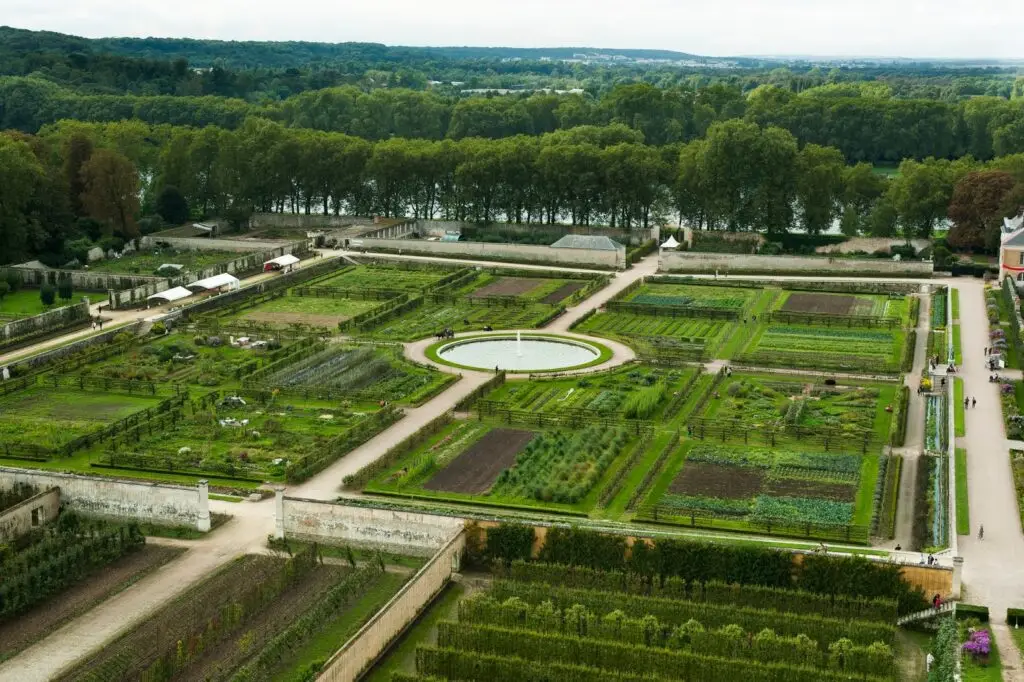
Le Potager du Roi, originally created for King Louis XIV in the 17th century, is now open to the public and continues to flourish just as it did centuries ago. Spanning 22 acres (9 hectares) – slightly larger today due to the addition of the asparagus patch, clos aux asperges – this historic kitchen garden lies to the south of the Château de Versailles.
How to Find The King’s Kitchen Garden
If you’re walking from the train station (Versailles Chateau – Rive Gauche) toward the Château, turn left onto the pedestrian street, Rue de Satory, where you’ll find charming restaurants, boutiques, and bars. When you reach Rue de l’Orangerie, the King’s Kitchen Garden is on your right, with the majestic Cathedral of St. Louis on your left.
A Garden Fit for the Sun King
Le Potager du Roi was established in 1670 by Jean-Baptiste La Quintinie, who had once been a lawyer before discovering his passion for horticulture during travels to Italy. King Louis XIV appointed him Director of the Royal Vegetable and Fruit Garden, and from 1678 to 1683, La Quintinie transformed swampy land into the royal kitchen garden. His statue still proudly surveys this Versailles garden’s grounds.

The Garden Today: A Living Heritage Site
Visiting this garden is one of the best things to do in Versailles beyond the palace. Le Potager du Roi continues to produce over 30 tons of fruit and 20 tons of vegetables annually. The gardeners still maintain more than 60 forms of fruit trees using the historical French espalier pruning methods – techniques developed during the 17th century.
With over 400 varieties of fruit trees and 300-400 varieties of vegetables, the garden preserves both its rich history and a diverse array of produce. While not 100% organic, certain areas of the garden have adopted organic practices for over six years as part of an ongoing effort to incorporate sustainable farming methods throughout the gardens.
Designated as a UNESCO World Heritage site, the garden still supplies fruits and vegetables as it did during Louis XIV’s reign, contributing to the grand feasts that made his court famous. You can read more about Louis XIV’s obsession with fruit growing right here.
From Swamp to Royal Garden: Engineering Marvels
Le Potager du Roi was transformed from marshland into one of the most beautiful gardens of Versailles. La Quintinie overcame the challenge of converting waterlogged terrain into a productive kitchen garden by installing an underground aqueduct system, rubble drains, and raised beds – revolutionary horticultural engineering for the 17th century.
Masterful Garden Design: Form Meets Function
Le Potager du Roi is not just functional; it’s a masterpiece of French garden design. The espaliered fruit trees, trained against the walls, absorb heat during the day and radiate it at night to protect the crops. These stone walls also provide shade, helping regulate this garden’s microclimate – a technique still studied by modern gardeners today.
Ten full-time dedicated gardeners, assisted by seasonal workers, keep this living piece of history thriving. The garden also offers horticultural classes and tours, with guided visits available on weekends at 11:00 a.m., 2:30 p.m., and 4:00 p.m. Check their website for seasonal programs and special events.

Fresh From the Garden: Shop Like Royalty
On Tuesdays, Thursdays, and Saturdays, the fruits and vegetables harvested from the garden are available to purchase at a small shop near the entrance. The shop opens at 10 a.m., and the best produce is usually gone by lunchtime, so arrive early! Seasonal specialties include heritage variety fruits, rare vegetables, and herbs grown using traditional methods.
Plan Your Visit to the King’s Kitchen Garden
Le Potager du Roi
Contact: +33 (0)1 39 24 62 62
Opening hours: April through October (closed on May 1st)
Tuesday to Sunday, 10 a.m. to 6 p.m.
Guided tours: 11 a.m. and 2:30 p.m. (also at 4 p.m. on weekends and holidays)
Admission: €4.50, free for children under 12
Address: 10 Rue du Maréchal Joffre, 78000 Versailles, France
The Museum of Trees: Arboretum de Versailles-Chèvreloup
A Living Tree Museum: Versailles’ Hidden Botanical Treasure
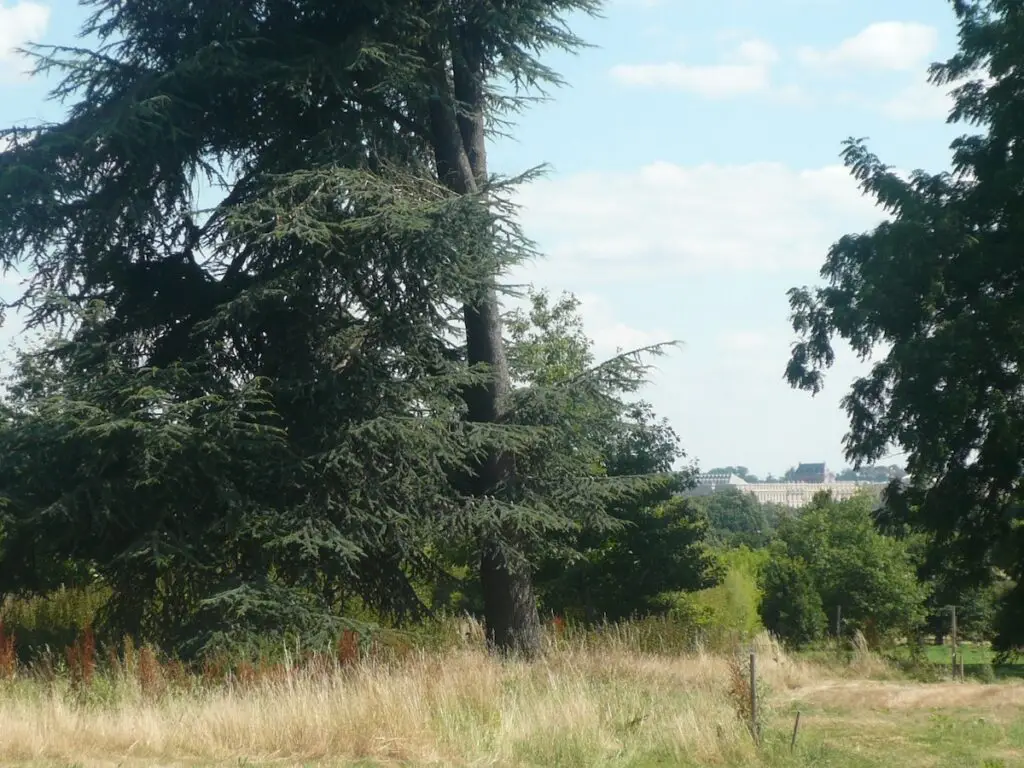
Nestled in the expansive estate of Versailles lies the Arboretum de Versailles-Chèvreloup, a hidden gem for nature lovers and botanical enthusiasts alike. This 200-hectare “Museum of Trees” is precisely that — a stunning collection of over 2,500 tree species from around the globe, making it one of the richest arboretums in Europe.
In partnership with Paris’ Museum of Natural History (Muséum National d’Histoire Naturelle), this living museum showcases trees grouped by geographic origin, allowing visitors to experience the plant life of various continents without ever leaving France! The collection includes rare specimens from Asia, North America, and Europe, some dating back over 200 years.
You can explore the arboretum either on foot or by bike along its 10+ kilometers of pathways. As you wander through the park, you’ll encounter towering oaks, vibrant rhododendrons, magnificent sequoias, and even quirky cultivars—species that don’t exist in the wild but have been carefully bred by humans over generations.
A Biodiversity Sanctuary Near Paris
The tree museum’s park also serves as a sanctuary for local wildlife– cementing its legacy as one of the best Versailles gardens for nature lovers. You’ll find various species of birds including woodpeckers, owls, and various songbirds, and may even spot foxes, hedgehogs, and deer in the forests. The arboretum plays a crucial role in biodiversity conservation in the Paris region.
Personal tip: If you want to be sure to see some remarkable trees in the Chateau Gardens, check out the article “Remarkable Trees of Versailles” from the official website — complete with a “treasure” map to locate centuries-old specimens!
Discover Exotic Plants: The Greenhouse Collections
For those seeking an extra-special experience, the arboretum’s greenhouses, which span over 6,000 square meters, house a collection of tropical and Mediterranean species such as orchids, fuchsias, and pelargoniums. These greenhouses are primarily used for conservation and research, and they open their doors to the public during special events, offering a rare glimpse of the plant world’s hidden wonders.
The arboretum also maintains specialized collections of conifers, oak species, and Asian maples, making it a paradise for dendrologists and garden enthusiasts. Seasonal highlights include flowering cherry trees in spring, vibrant maples in autumn, and the evergreen collection in winter.
With its exceptional variety of flora and tranquil setting, the Arboretum de Versailles-Chèvreloup is a must-visit for anyone looking to enjoy nature’s beauty and diversity just outside Paris. Whether you’re a casual stroller or a passionate botanist, this tree museum promises a day of discovery, serenity, and inspiration.
Take a look for yourself below:
Plan Your Visit to the Museum of Trees
Arboretum de Versailles-Chevreloup
Official website: www.arboretumdeversailleschevreloup.fr
Contact: +33 (0)1 39 55 53 80
Opening hours: April through November
Open daily from 10 a.m. to 6 p.m.
Closed on Tuesdays in low season and on May 1st.
Guided tours: Available on request (book in advance for English tours)
Admission: Full price: €7, Reduced price: €5, Free for children under 3
Address: Chemin de Chèvreloup, 78150 Rocquencourt, France
Pro Tip: For real tree lovers, check out this app from the Chateau of Versailles on “The Admirable Trees” on their estate. There’s also a downloadable leaflet on their site. (Haha, get it? Leaflet?)
The Courtyard of Scents: Cour des Senteurs
A Fragrant Journey: Versailles’ Perfume Heritage Garden
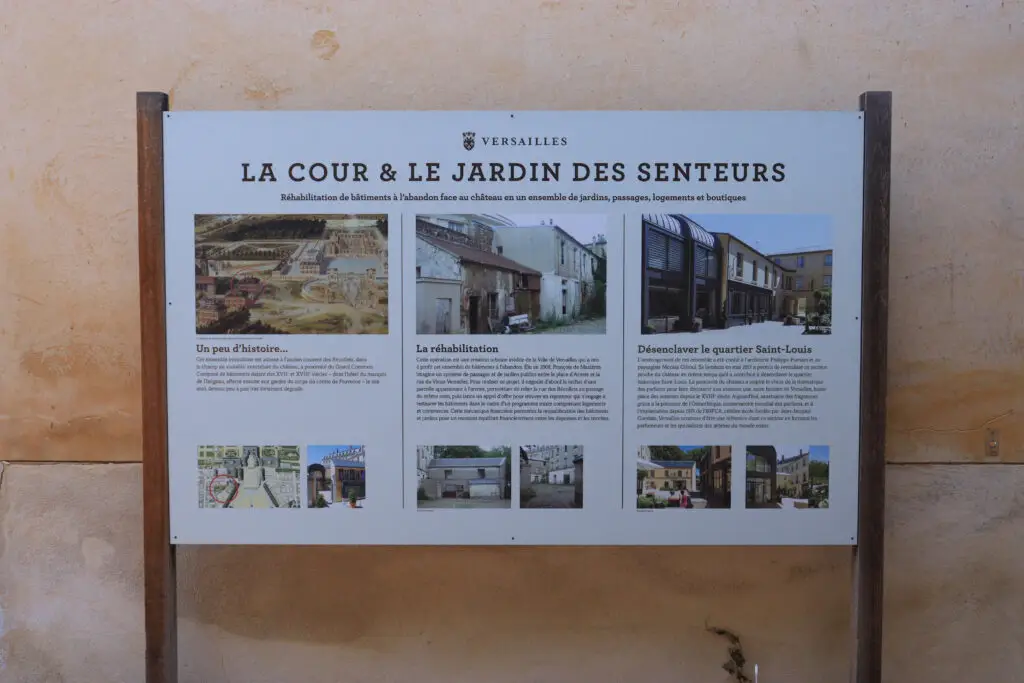
When it comes to the best Versailles gardens off the beaten path, the Cour des Senteurs, or Courtyard of Scents, is a stellar spot offering a unique sensory experience for visitors. Located just a short distance from the Palace of Versailles, this charming garden and luxury shopping area pays homage to the art of French perfumery, a craft that has been deeply intertwined with the history of Versailles since the time of Louis XIV.
Opened in 2013, the Cour des Senteurs was designed to highlight the influence of Versailles on the world of perfume. During the reign of Louis XIV, known as the “Sun King,” perfumes became an integral part of the court’s daily life, with Versailles setting trends in fragrances that influenced all of Europe. The garden is a celebration of this cultural heritage, offering an immersive experience in the world of scents. While “The Maison des Parfums” has been replaced by charming boutiques and cafés, the garden remains dedicated to France’s perfume legacy.
The Sensory Garden Experience
The Cour des Senteurs features a beautifully landscaped garden designed to stimulate the senses. It showcases a variety of fragrant plants and flowers, like roses, lavender, jasmine, and aromatic herbs, reflecting the types of ingredients that have been used for centuries in the production of perfumes.
The garden’s design invites visitors to take a peaceful, sensory stroll, enjoying the fragrances that change with the seasons. Interactive elements allow visitors to discover the different fragrance families that form the foundation of French perfumery.
Luxury Fragrance Boutiques
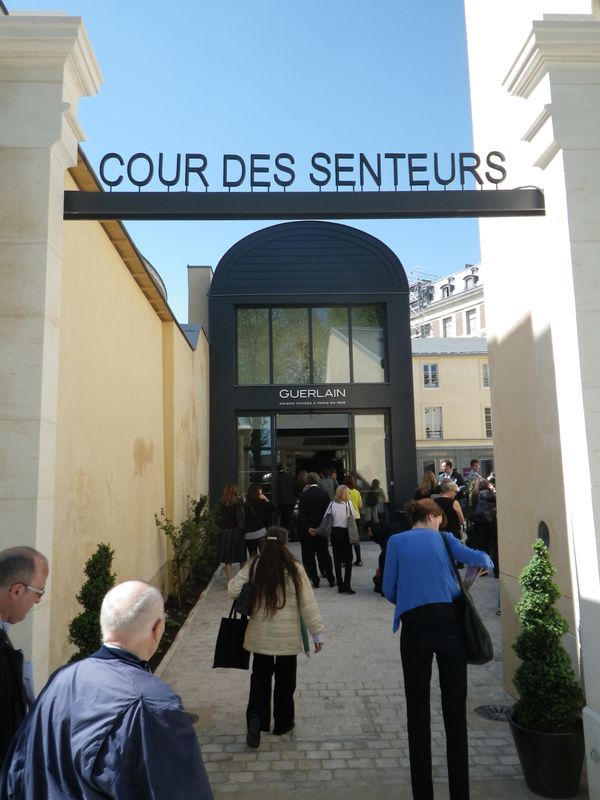
Around the small garden, you’ll be able to purchase prestigious perfumes in the local boutiques. These make wonderful souvenirs to take home. Notable names include:
- Guerlain: One of the most iconic French perfume houses, showcasing their creations inspired by Versailles and its royal history.
- Diptyque: Known for their luxury candles and fragrances, offering a variety of products rooted in the world of scents.
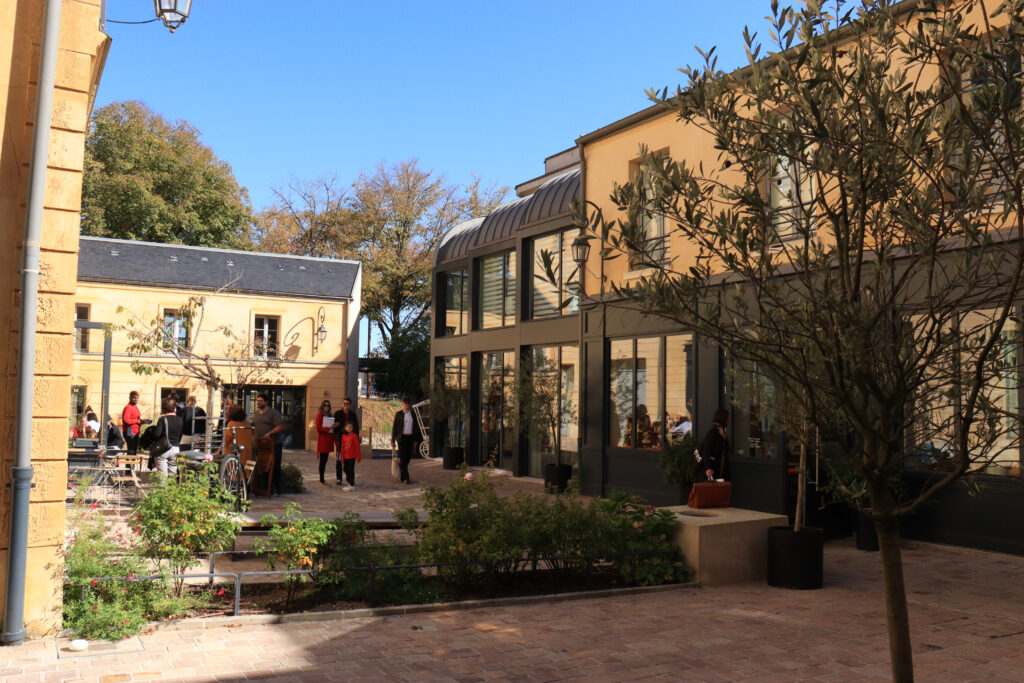
Several other boutiques and cafés surround the courtyard, making it a perfect spot for a refined shopping experience after your palace visit.
Architectural Charm
The courtyard itself is designed in a clean and elegant style, with a subtle nod to the classical architecture of Versailles. It’s a blend of modern landscaping with historical charm, providing a tranquil spot away from the crowds of the palace.
Visiting the Cour des Senteurs gives you a different perspective of Versailles, where you can indulge in the sensory experiences of fragrance, beauty, and a little piece of history often overshadowed by the typical tourist routes. It’s particularly magical in late spring when the rose garden is in full bloom.
Plan Your Visit to the Courtyard of Scents
La Cour des Senteurs (The Courtyard of Scents)
Tourism information: www.versailles-tourisme.com
Contact: +33 (0)1 39 24 88 88
Best visiting time: April through October (best time to go is in the Springtime, when the flowers are in bloom)
Open daily from 10 a.m. to 7 p.m.
Closed on May 1st.
Admission: Free entry
Address: 8 Rue de la Chancellerie, 78000 Versailles, France
Making the Most of Your Visit to Versailles’ Hidden Gardens
Combined Tickets and Tours
While each garden can be visited separately, consider planning a full day to explore all three of these hidden gems. Some tour operators offer specialized “Secret Gardens of Versailles” tours that include transportation between sites and expert guides.
Best Seasons to Visit
- Spring (April-June): Ideal for the Cour des Senteurs when roses and spring flowers are in bloom, and for seeing fruit trees blossoming in Le Potager du Roi.
- Summer (July-August): Perfect for the Arboretum when the tree canopy provides welcome shade, and when the Kitchen Garden is at peak production.
- Fall (September-October): Outstanding for the Arboretum’s fall colors and for harvest season in the Kitchen Garden.
Photography Tips
These gardens offer extraordinary photography opportunities away from the crowds. Early morning provides the best light for capturing the Kitchen Garden, while late afternoon golden hour enhances the colors of the Arboretum. The Cour des Senteurs offers charming details for macro photography enthusiasts.
Dining Nearby
Pack a picnic to enjoy in designated areas of the Arboretum, or explore the restaurants along Rue de Satory near the Kitchen Garden. The Cour des Senteurs area offers several upscale cafés perfect for an afternoon tea or light lunch.
Versailles Beyond the Palace
The Palace of Versailles draws millions each year—and for good reason. But these three secret gardens offer something the crowded halls can’t: peace, intimacy, and a direct connection to royal horticultural heritage.
Step beyond the palace walls. Discover Le Potager du Roi, the Arboretum de Versailles-Chèvreloup, and the Cour des Senteurs. Experience the side of Versailles where nature and history create something truly unforgettable.