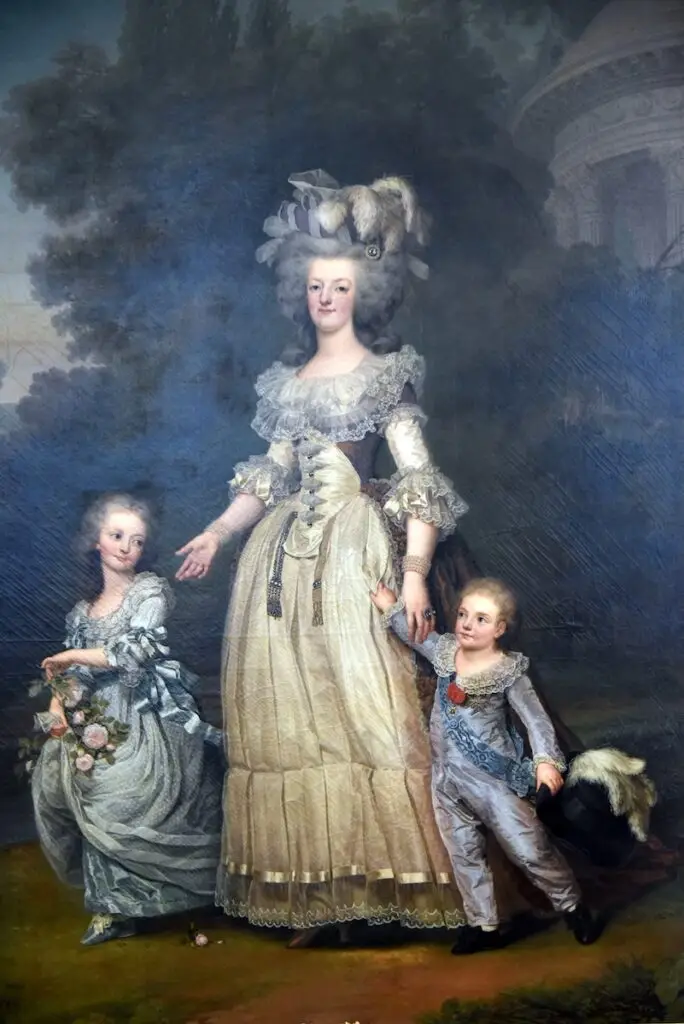
Marie Antoinette’s adopted children might just be the most surprising part of her legacy. While she’s remembered for diamonds, decadence, and a downfall at the guillotine, the queen of France also opened her palace—and her heart—to orphaned children in need.
Long before she became a symbol of royal excess, Marie Antoinette quietly mothered a handful of forgotten souls, offering them safety, education, and affection inside Versailles.
These hidden stories reveal not a villainess, but a complex woman whose compassion was overshadowed by politics and propaganda. And they just might change the way you think about one of history’s most misunderstood figures.
The Unexpected Adoptions that Redefined a Queen
Marie-Antoinette’s journey as an adoptive mother began quite accidentally, and each child came into her life through circumstances that show us the queen’s temperament and values.
Jacques Gagné: The First of Marie Antoinette’s Adopted Children
The boy that almost got run over.
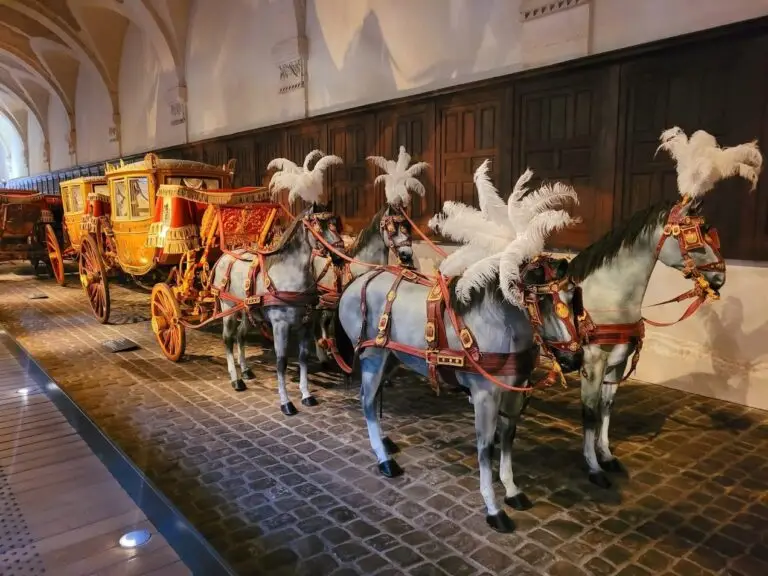
Jacques Gagné was just three years old when his life changed forever. One spring morning in 1776, the child almost got run over by the queen’s carriage while playing near the palace grounds.
His grandmother’s screams for help caught Marie-Antoinette’s attention, and when she came to help the child ran to her—with his blonde hair and bright blue eyes—she felt an immediate connection.
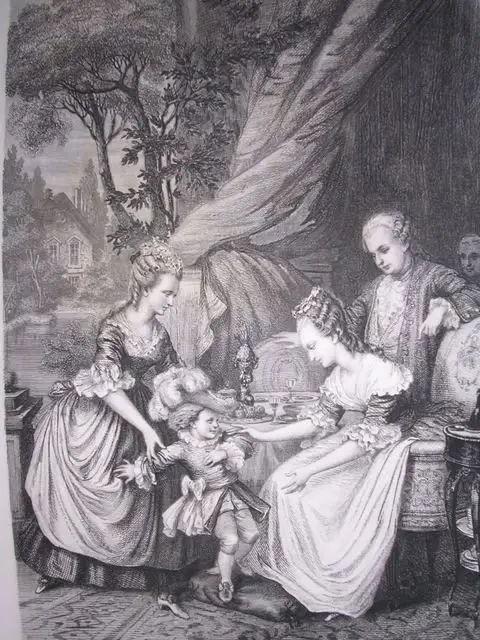
“This child is mine now,” she reportedly declared, and asked the grandmother for permission to adopt him.
The family agreed to let him live in the castle, likely experienced mixed emotions—relief that the boy was unharmed, surprise at the queen’s interest, and perhaps concern about giving him up, even to royalty.
Marie Antoinette was only 20 years old at the time.
Marie-Antoinette renamed him Armand de Bourbon (a fancier, more royal-sounding name) and from that point on, he came to live with her in the castle in Versailles.
This represented quite the adjustment for a three-year-old from a humble background, suddenly transitioning from a simple life to having his own royal chambers. The transition wasn’t easy, and it wasn’t easy for the toddler to hide his emotions.
Little Jacques/Armand is said to have had quite a fiery personality. According to Madame Campan, who was Marie Antoinette’s lady-in-waiting, he could be moody and stubborn.
He didn’t always behave like a well-behaved little royal. He threw tantrums, made demands, and often challenged the authority of the adults around him.
Even with his outbursts, Marie Antoinette was very fond of him. She liked his spirit and energy, even if he wasn’t always easy to handle.
She often invited him to eat with her and let him join her morning routines, like having snacks or light meals in her private chambers. Sometimes he dined with the royal family, and according to Madame Campan’s memoirs, even King Louis XVI was reportedly fond of the boy.
When Marie-Antoinette later had biological children, beginning with Marie-Thérèse in 1778, her attention naturally shifted somewhat. Still, she never abandoned Jacques. Court records show she continued supporting him financially and overseeing his education.
The most ironic twist in Jacques’ story is that during the French Revolution, he allegedly turned against his royal benefactors. After years of privilege and protection, Armand joined the revolutionaries and reportedly participated in events that contributed to their downfall.
Historians debate the extent of his involvement, but I guess we’ll never know for sure.
Jean Amilcar: The Boy Freed from Slavery
The story of Jean Amilcar reveals another dimension of the queen’s character. In 1787, the Chevalier de Boufflers presented a young enslaved boy to Marie-Antoinette as a “gift.” Back then it was sadly common to treat people as objects.
But Marie-Antoinette responded in an unexpected way. She said “no”.

Instead of accepting this “gift” as many in her position might have done, she immediately freed the boy from slavery and adopted the boy as her own son.
Marie-Antoinette renamed him Jean Amilcar and arranged for his education at her personal expense. Financial records show her payments for his schooling—clear evidence of her ongoing commitment. Jean showed artistic talent, and the queen sent him to Liancourt College to train as a painter.
Tragically, Jean got sick and died young. In his short life, he went from being treated like property to being loved, educated and respected — all because of the queen’s kindness.
The Three Orphan Girls: Marie Antoinette’s Adtoped Daughters of the Revolution
A quiet kindness.
By 1790, the Revolution was in full swing, and Marie-Antoinette’s position grew increasingly precarious. Yet even as her own world crumbled, she continued to open her heart to children in need.
Historical records document her adoption of three orphaned girls during this turbulent period. Two were sent to a convent for safety and education, while the youngest, Zoé, lived with the royal family at the Tuileries Palace.
Even after her imprisonment, Marie-Antoinette continued inquiring after these girls and ensuring they received financial support. She wrote letters from her cell, concerned about their welfare even as she faced her own mortality. That level of dedication speaks to genuine maternal feeling, not just royal charity.
Denis Gagné: The Musical Protégé
Denis Gagné, likely Jacques’ brother, benefited from the queen’s patronage in a different way. Denis was good at music, so Marie-Antoinette made sure he got lessons. He eventually became the king’s cellist. This shows that her support extended to entire families, not just individual children.
Denis moved between his humble origins and the rarefied atmosphere of court performances, developing his talent under royal patronage. We’re not sure what became of his fate after the Revolution.
What Marie-Antoinette’s Adopted Children Reveal About Her Character
I think the popular image of Marie-Antoinette as a shallow queen is incomplete.
When we look at the different stories about Marie-Antoinette’s adopted children, we see a different side: a woman capable of deep care and generosity.
She didn’t just provide for them while it was fashionable. She kept supporting them even when imprisoned, even when the monarchy fell.
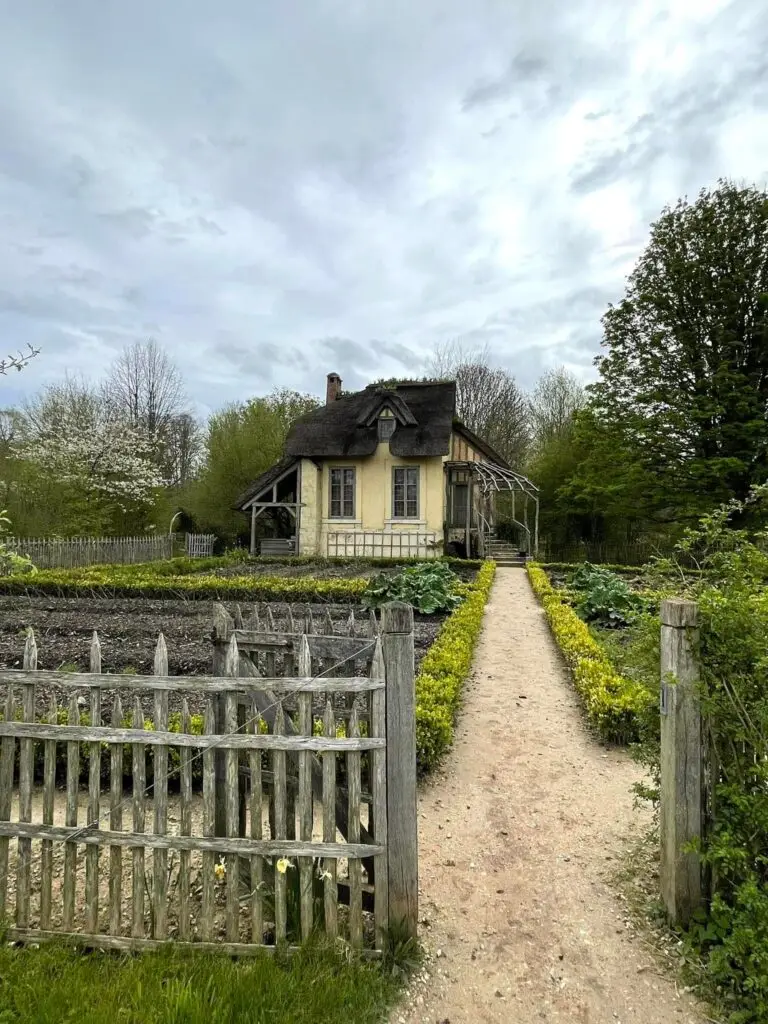
Her modest chambers and hamlet at Versailles, was were she would have spent time with her children. They are much more modest and intimate than people expect, given her reputation.
They are far from the extravagant halls, and may have been where she felt most herself—a simple mother trying to make a difference. Maybe you can envision her there, not as the extravagant queen of popular imagination, but as a woman who found joy in providing for children who needed protection.
These adopted children gave her something beyond royal duty: a chance to care without political expectations. In turn, she gave them names, the promise of a future, and affection they may never have known otherwise.
These stories of Marie-Antoinette’s “found children” offer a different perspective on her as a historical figure. Far from the callous “let them eat cake” caricature, these relationships reveal someone capable of genuine empathy and responsibility.
Her continued support for these children, even as her own situation grew desperate, suggests that her attachment wasn’t merely for show or novelty. She maintained financial commitments to their education and welfare even when the treasury was strained and her popularity was plummeting.
These adoptions also reveal something about Marie-Antoinette’s struggle with her public role versus her private desires. Unable to escape the political pressures and expectations of being queen, perhaps these children represented a space where she could express more authentic maternal feelings outside the dynastic implications of her biological children.
If You Want to Learn More
- Madame Campan’s Memoirs – She was the queen’s lady-in-waiting and wrote down lots of stories about life at the palace.
- “Marie-Antoinette: The Journey” by Antonia Fraser – A biography that shows both the good and the bad.
- “Marie-Antoinette” by Marguerite Jallut and Philippe Huisman – Lots of details and pictures too!