
Did you know that over 150,000 Americans currently call France home? I remember sitting in a loft in downtown Los Angeles, scrolling through pictures of Parisian cafés and Provençal lavender fields, as my best friend was waxing poetic about what it would be like to live in Paris. To be completely honest, living in France was never my dream, but here I am, years later, writing this from my house near Versailles! Easily influenced, I suppose, but I followed her here and never went home. Moving to France was easily the most challenging yet rewarding adventure I’ve ever undertaken, and I wouldn’t change a minute of it.
It’s so true that the blend of rich history, incredible food, comprehensive healthcare, and that famous work-life balance makes France an irresistible destination for many Americans. But let’s be real – relocating across the Atlantic isn’t just about packing bags and saying “bonjour” to your new life. There’s visa paperwork (lots), language barriers, cultural adjustments, and a mountain of logistics to navigate.
In this guide, I’ll walk you through everything I wish I’d known before moving to France (and there’s a LOT). From visa options to finding housing, healthcare considerations to making friends, I’ve made all the mistakes so you don’t have to…
So whether you’re planning to retire in Provence, work in Paris, or study in Strasbourg, I hope that this comprehensive roadmap will help make your transition as smooth as possible.


What Are French Visa Requirements?
Getting the right visa is oftentimes the most stressful part of moving to France as an American. This is definitely the thing that you want to consider first. Luckily, this wasn’t a problem for me, I slid in on my Irish passport, thanks to my Northern Irish dad. Still, I get asked this question a lot, and below you’ll find some of the things I’ve found out.
Long-Stay Visa Options for Americans
France offers several long-stay visas, and choosing the right one is crucial:
- Visitor Visa (Visa de Long Séjour Visiteur): Perfect if you’re retiring or have sufficient savings. You’ll need to prove financial self-sufficiency (roughly €1,500 monthly income) and promise not to work in France. This is what my friends Josh and Cecilia used – they sold their house and now live off investments and their U.S. pensions and spend their days tending to their garden outside of Paris. You can check out their YouTube channel here.
- EU Family Connection: If you have a parent or grandparent who was born in an EU country, you might be eligible for EU citizenship. This was my path – my father is Irish, which allowed me to obtain an Irish passport and avoid the visa process entirely. This option offers complete freedom to live and work throughout the EU.
- Student Visa (Visa de Long Séjour Étudiant): For those accepted to a French educational institution. You’ll need an acceptance letter, proof of finances (about €615/month), and health insurance. We’ve had many an au pair take this route – the application process took about two months.
- Work Visa (Visa de Long Séjour Travailleur): You’ll need a job offer from a French employer willing to sponsor you. The employer must prove they couldn’t find a qualified EU candidate, which can be tricky. My tech industry friend had his startup create a position specifically tailored to his unique skills to make this work. This kind of visa is difficult to get.
- Entrepreneur/Self-Employed Visa (Profession Libérale): For freelancers or business owners. You’ll need a solid business plan, proof of qualifications, and financial resources. I met an American graphic designer who moved here on this visa, working remotely for U.S. clients while living in Montpellier. Don’t underestimate how much you’ll pay in taxes and social charges here.
- Talent Passport (Passeport Talent): A special 4-year visa for highly qualified professionals, researchers, artists, and entrepreneurs. This is the golden ticket if you qualify!

Application Process Timeline
Start gathering documents at least 6 months before your planned move. I underestimated how long it would take to get my birth certificate apostilled and translated for my French citizenship – almost 8 weeks right there! The whole process for me took 11 months, no joke!
The typical application process follows these steps:
- Create an account on France-Visas website
- Complete the application form
- Gather required documents (birth certificate, passport, proof of accommodation, financial resources, health insurance)
- Schedule a visa appointment at your nearest French consulate
- Attend the interview and submit documents
- Wait for processing (can be months)
- Once approved, you have 3 months to enter France
After arrival, you’ll need to validate your visa and potentially apply for a residence permit (carte de séjour) depending on your visa type. My appointment for this was scheduled 3 months after arrival, which caught me off guard!
Common Visa Application Mistakes
Learn from my blunders. Here are the most common visa application mistakes:
- Incomplete documentation (I forgot my proof of accommodation the first time)
- Insufficient financial proof (ex. 3 months of bank statements, not just one)
- Inadequate health insurance coverage
- Missing document translations (everything must be translated by a sworn translator)
- Applying too early or too late (the sweet spot is 3 months before your move)

Finding Housing in France
Finding our first apartment took over a month and countless viewings. The rental market moves fast here, and landlords typically want tenants who earn 3x the monthly rent, a CDI job and a co-signer.
Understanding Different Regions
France offers diverse living experiences depending on the region:
- Paris and Île-de-France: The most expensive area with the highest job opportunities, especially in tech, fashion, and finance. Expect small apartments and high competition in the city, though the suburbs can offer more space. We eventually settled near Versailles after initially staying in central Paris. The area offers a perfect balance – proximity to the city while providing enough space for my children, who were all born here in France. Housing in Versailles and the surrounding areas ranges widely, but you can find family homes in the suburbs that would be impossible to afford in central Paris.
- Provence and Côte d’Azur: Gorgeous weather, Mediterranean lifestyle, but expensive housing and seasonal tourist crowds. Popular with retirees and remote workers. My American expat friends in Nice pay about €1,400 for a two-bedroom apartment.
- Lyon and Bordeaux: Great “middle ground” cities with reasonable prices, excellent food scenes, and good job markets. I’d say these places have less an expat/anglophone influence and are better places if you want to push yourself to learn French.
- Rural France: Incredibly affordable (you can buy stone houses for under €100,000 in some regions), peaceful lifestyle, but fewer amenities and employment opportunities. You’ll definitely need a car and solid French skills.
Renting Process and Required Documents
The French rental process can be a nightmare without preparation. You’ll need a hefty “dossier” including:
- Passport and visa/residence permit
- Proof of income (typically 3x the monthly rent)
- Recent tax returns
- Employment contract
- Previous landlord reference
- French bank account statements
- Guarantor (this is a huge hurdle as a newcomer, most of them want a FRENCH guarantour)
For those without French income history, you might need a guarantor or pay several months’ rent in advance.
Buy vs. Rent Considerations
I initially planned to buy property immediately but am glad I rented first to learn the neighborhoods. Consider:
- Non-EU citizens can buy property without restrictions
- Mortgage rates for foreigners are typically higher
- Notary fees and taxes add about 7-10% to purchase price
- Property taxes (taxe foncière) and housing tax (taxe d’habitation) apply annually
- Selling can be a lengthy process (average 3-6 months, or more!)
If staying long-term (5+ years), buying can make financial sense, especially outside major cities. My American neighbors in Provence bought their village house for the price of a parking spot in San Francisco!

Healthcare and Insurance in France
The French healthcare system consistently ranks among the world’s best, and accessing it was a pleasant surprise after the U.S. system. I still remember my shock when my doctor’s visit cost only €25, and I was reimbursed €16.50 of that!
Understanding the French Healthcare System
France has a universal healthcare system (Assurance Maladie) that covers approximately 70-80% of most medical costs. The remaining portion is typically covered by complementary private insurance (mutuelle).
As a legal resident, you’ll be eligible to enroll in the national healthcare system after three months of residence. Until then, private insurance is mandatory.
The system works on a reimbursement model: you pay upfront and get reimbursed later (though hospitalization costs are directly covered). Once you receive your Carte Vitale (health insurance card), reimbursements happen automatically within a week.

Private Health Insurance Requirements
When I first arrived, I needed private health insurance that:
- Covered at least €30,000 in medical expenses
- Included repatriation coverage
- Had zero deductible for hospital stays
- Covered pre-existing conditions (this was tricky!)
Popular options among expats include:
- Cigna Global
- Allianz Care
- April International
- AXA PPP International
Registering with the French System
Once eligible, registering for French healthcare involves:
- Creating an account on the Ameli website
- Submitting your long-stay visa/residence permit
- Providing proof of residence (utility bill, rental agreement)
- Supplying your birth certificate (apostilled and translated)
- Providing banking information for reimbursements
Just months after I arrived in Europe, I had an emergency surgery to get my appendix removed. Fortunately these two things were in my favor:
- I had the cash to pay the bill on site
- I was reimbursed by Social Security, once I got all my paperwork together
The process took me about two months from application to receiving my Carte Vitale. During this waiting period, keep all medical receipts for retroactive reimbursement!

Banking and Finances
Setting up proper banking was crucial but frustrating. I tried to open an account online before arriving and wasted weeks in the process!
Opening a French Bank Account
You’ll need a French bank account (compte courant) for:
- Paying rent and utilities
- Receiving salary
- Setting up mobile phone contracts
- Tax payments and reimbursements
Traditional banks like BNP Paribas, Société Générale, and Crédit Agricole typically require:
- Passport and visa/residence permit
- Proof of address (less than 3 months old)
- Employment contract or proof of resources
- Sometimes a deposit (€50-150)
I ultimately opened an account with online bank Boursorama, which offered free banking and English-speaking customer service. However, I needed a French phone number first, creating a chicken-and-egg problem!
Pro tip: Banks like HSBC and Crédit Agricole have “expatriate services” that can open accounts before arrival – worth the extra fees for the convenience.
Managing Taxes Between Countries
The U.S.-France tax treaty prevents double taxation, but you’ll still need to file in both countries. Key considerations:
- U.S. citizens must file annual tax returns regardless of residence
- After 183 days in France in a calendar year, you become a French tax resident
- The French tax year is the calendar year with returns typically due May-June
- Foreign income exemptions and credits can reduce your U.S. tax liability
- The Foreign Bank Account Report (FBAR) is mandatory if your French accounts exceed $10,000 combined
I hired a specialized expat accountant for my first year’s taxes – expensive (€600) but worth avoiding potentially costly mistakes. Now I use tax software with expat features.
Currency Exchange and Money Transfers
Regular transfers between countries can get expensive! After losing nearly €1,000 in my first year to bank fees and poor exchange rates, I switched to specialized services:
- Wise (formerly TransferWise): Best for regular smaller transfers
- OFX: Better for larger amounts (€5,000+)
- Revolut: Great for spending in multiple currencies
I now keep accounts in both countries, transferring larger amounts quarterly when exchange rates are favorable rather than monthly small transfers.


Learning French and Cultural Integration
“You’ll never truly integrate without speaking French.” My neighbor said this to me during my first week, and truer words were never spoken! I thought my high school French would suffice – it absolutely did not.
Language Learning Resources
Investing in proper French learning was the best decision I made. Resources that worked for me:
- Alliance Française courses: Structured classes with native speakers (about €300/term)
- Italki: One-on-one online lessons with French teachers (€15-25/hour)
- Language exchange meetups: Free practice with locals wanting to learn English
- TV5Monde: French TV with interactive learning exercises
- France Culture podcast: Advanced listening practice
- “Coffee Break French” podcast: Great for beginners
I spent about 10 hours weekly on French study for the first year. Six months in, I could handle most daily interactions; after 18 months, I could comfortably participate in dinner party conversations.
Cultural Norms and Etiquette
French social codes are subtle but important! My biggest faux pas:
- Greeting: Always say “Bonjour” before asking for anything. I once walked into a bakery and immediately ordered, receiving icy stares.
- Kissing cheeks (la bise): Varies by region (1-4 kisses). Watch what locals do and follow suit.
- Dining etiquette: Keep hands visible on table, bread on the tablecloth (not plate), no doggy bags
- Conversation: Politics and money are acceptable topics, unlike in the U.S.
- Formality: Use “vous” instead of “tu” until invited to do otherwise
- Punctuality: For social events, arriving 15 minutes late is standard (being exactly on time for dinner can be awkward)

Building a Social Network
Making French friends takes time! As someone who initially came as an au pair, I had a built-in connection to a French family, which helped tremendously. If you’re moving with children, school connections become an invaluable social network. After some initially lonely months, I finally expanded my community through:
- Expat groups: Facebook communities like “Americans in France” provided initial support
- Meetup.com groups based on interests (hiking, cooking, language exchange)
- Sports clubs and associations (I joined a local tennis club)
- Volunteering (I helped at an English conversation club at the local library)
- Professional networking events
- University alumni associations
My breakthrough came when I joined a weekly cooking class. Shared activities create natural conversation opportunities when language skills are limited!

Moving to France as an American: Navigating Daily Life
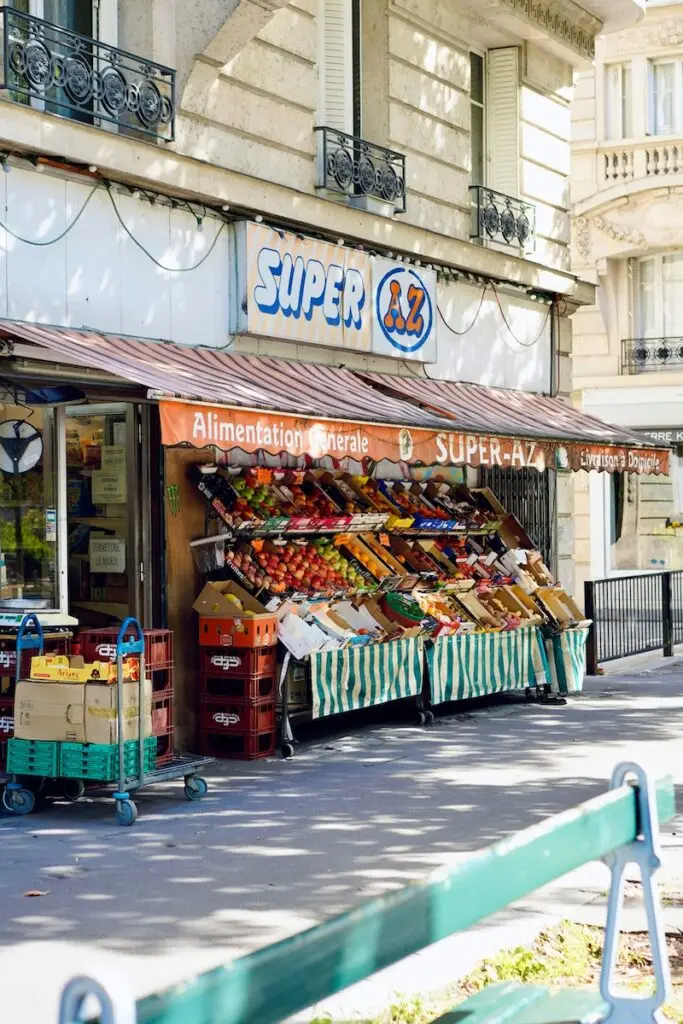
The rhythm of daily life differs significantly from America. I remember being frustrated trying to shop on Sundays or eat dinner at 6 PM – both nearly impossible!
Shopping and Consumer Services
Practical differences to prepare for:
- Business hours: Many shops close between 12-2 PM and all day Sunday
- Supermarkets: Smaller with fewer options than American stores
- Specialized shopping: Separate shops for bread, meat, cheese, etc.
- Customer service: Less emphasis on “the customer is always right”
- Returns: Much stricter policies than in the U.S.
- Sales (les soldes): Nationally regulated discount periods (January and July)
I now shop at local markets weekly and have adjusted to planning ahead for Sundays and holidays when most businesses close.
Transportation Options
France offers excellent public transportation, which changed my relationship with car ownership:
- Trains: The SNCF network connects most towns and cities
- Urban transport: Metros, trams, and buses in larger cities
- Carpooling: BlaBlaCar for intercity travel (I use this monthly)
- Biking: Expanding networks and rental programs like Vélib’
- Driver’s license: Americans must convert their license within one year or take the French driving test
I’ll be honest; I sold my car after six months and rely on public transit, occasional car rentals, and my bicycle. I save roughly €300 monthly compared to car ownership.
Utilities and Services Setup
Setting up essential services presented unexpected challenges:
- Electricity/Gas: Main providers are EDF and Engie
- Internet: Orange, Free, SFR, and Bouygues are major providers
- Mobile phones: Contracts require French bank accounts
- TV License: Required if you own a television (€138 annually)
- Water: Often included in apartment charges
When I arrived, getting the internet installed took five weeks. Consider mobile hotspots as temporary solutions. For utilities, online comparison tools like selectra.info help find the best rates.
Legal Considerations and Bureaucracy
French bureaucracy deserves its infamous reputation. My residence permit renewal took four appointments and seven months from application to approval!
Residence Permit Renewal Process
Long-stay visas typically convert to residence permits (carte de séjour). The renewal process involves:
- Starting the application 2-3 months before expiration
- Gathering updated documentation (proof of resources, accommodation, health insurance)
- Booking an appointment at your local prefecture
- Biometric data collection
- Receiving a temporary receipt (récépissé) while waiting
- Collecting the new card when ready
Requirements vary by permit type. I created a document checklist template that I update yearly, which has saved countless headaches.
Understanding Employment Rights
If you plan to work in France, know your strong labor protections:
- Employment contracts: CDI (permanent) or CDD (fixed-term)
- Working hours: Legally limited to 35 hours/week
- Paid leave: Minimum 5 weeks annual vacation plus public holidays
- Trial periods: 1-4 months, depending on position
- Termination: Strictly regulated with mandatory notice periods
- Unions: Strong presence even in non-unionized workplaces
I initially worried about the 35-hour workweek limiting my productivity. In reality, it forced a better work-life balance and improved my efficiency.
Wills and Estate Planning
Cross-border inheritance can be complicated. Consider:
- EU succession regulations allow choosing U.S. law for inheritance
- French forced heirship rules otherwise apply
- Estate tax treaties exist, but careful planning is necessary
- Real estate in France is always subject to French inheritance laws
- Creating both French and U.S. wills (ensuring they don’t conflict)
I consulted an international estate planning attorney (€500 for initial consultation) who helped create appropriate documentation for both countries.

Preparing for the Move to France From the USA
The physical move required meticulous planning. I started preparing six months in advance, but still felt rushed. My experience was unique – coming first as an au pair meant I arrived with just two suitcases, but when I decided to stay permanently, I had to coordinate a more substantial relocation.
Moving to France Checklist and Timeline
My recommended timeline:
- 12 months before: Research visa options, start language learning
- 9 months before: Apply for passport renewal if needed, research cities/neighborhoods
- 6 months before: Begin visa application process, research shipping options
- 4 months before: Secure temporary accommodation, obtain an international driver’s permit
- 3 months before: Book flights, begin selling/donating possessions
- 2 months before: Arrange shipping, purchase insurance, notify financial institutions
- 1 month before: Close unnecessary accounts, arrange mail forwarding, schedule utility disconnections
- 2 weeks before: Perform medical/dental checkups, obtain prescription supplies
- 1 week before: Exchange some currency, download useful apps, back up documents to the cloud
Shipping and Moving Services
I explored several shipping options:
- Air freight: Fastest but most expensive ($1,500 for three large suitcases)
- Sea freight: Economical for larger shipments ($3,000 for a one-bedroom apartment)
- Consolidated shipping: Shared container space ($2,000 for 15 boxes)
- Luggage shipping services: Convenient for extra baggage ($250-400 per large suitcase)
I ultimately sold most furniture, shipped 12 boxes via consolidated container, and brought four checked bags on my flight. In retrospect, I wish I’d shipped even less!
Essential Documents Checklist
Keep these documents in carry-on luggage:
- Passport with visa
- Birth certificate (apostilled and translated)
- Marriage certificate, if applicable (apostilled and translated)
- Driver’s license and International Driving Permit
- Academic diplomas and transcripts
- Medical records and vaccination history
- Pet health certificates and import documentation
- Several passport photos
- Financial records (bank statements, tax returns)
- Rental/accommodation proof
- Travel insurance confirmation
Create digital backups of everything, stored in encrypted cloud storage and on a portable hard drive.

Conclusion: Embracing Your New French Life
Moving to France has transformed my perspective on work, relationships, and quality of life. The journey wasn’t easy – there were tears in government offices, language misunderstandings, and moments of intense homesickness. But the rewards have been immeasurable.
Since first arriving as an au pair, I’ve developed deeper friendships than I ever expected, mastered the art of the two-hour lunch, and discovered parts of myself that Los Angeles never revealed. The challenges of moving abroad force personal growth in unexpected ways – from navigating school systems for my four children to building a permanent home near Versailles that bridges both cultures.
If you’re considering this move, prepare thoroughly but also embrace the uncertainty. The French have a beautiful expression: “petit à petit, l’oiseau fait son nid” (little by little, the bird builds its nest). Your adaptation won’t happen overnight, but with patience and perseverance, France can become truly home.
I’d love to hear about your experiences or answer specific questions about relocating to France. Feel free to share your own French dreams or challenges in the comments below!
Remember, the perfect time to make this move doesn’t exist – sometimes you just need to book that one-way ticket and trust that you’ll figure out the rest along the way. Bonne chance et à bientôt en France!